
Have you tried out the NRP 77 chatbot?
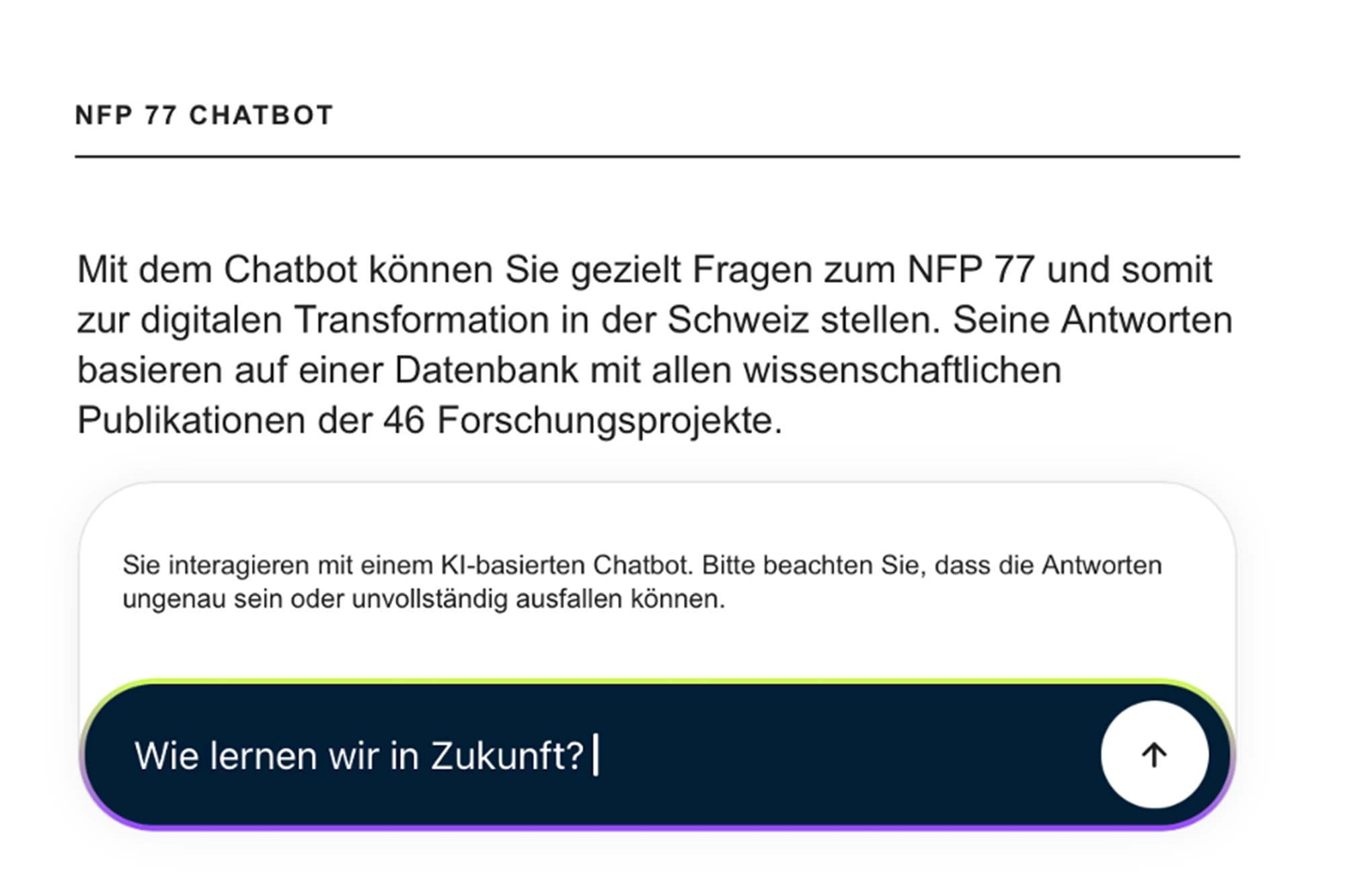
It answers questions on the digital transformation in Switzerland – drawing on scientific publications from all NRP 77 research projects. Try it today.
The NRP 77 chatbot allows you to ask specific questions on the results of the research programme and on the digital transformation in Switzerland – for example on what the research says about the opportunities and risks of AI in the classroom, how trust can be built in digital administrative services, and on the impact of automation on the Swiss labour market.
The chatbot’s answers are generated from a database containing all the scientific publications from the 46 research projects. They then directly cite the scientific sources.
The chatbot is aimed at professionals, decision-makers in policymaking, administration and the economy, and media representatives who are seeking rapid and sound answers on the findings of the programme and on the digital transformation in Switzerland more broadly.
“The NRP 77 chatbot is the ideal complement to the Research Programme’s synthesis report. While the synthesis report provides a sound analysis of the results of NRP 77 from the perspective of the international steering group, the chatbot can answer specific questions related to NRP 77 topics. The answers generally come from various sources, usually from different projects. Thanks to the chatbot’s intensive training, the quality of the responses is surprisingly high,” says Mathis Brauchbar, Head of Knowledge Transfer for NRP 77.
Examples of things you can ask the chatbot:
How will we learn in the future?
Does democracy still work in the digital space?
What skills will I need for the future of work?
The so-called RAG chatbot was developed as an SNSF pilot project. It is running in a Swiss data environment and will be assessed after half a year. The SNSF is using the project to explore ways of sharing research findings in a more immediate and accessible way in future – the insights should also benefit other National Research Programmes.